

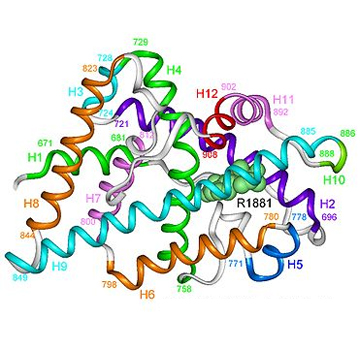
Gene name: AR. OMIM: 313700. Location: Xq12. The gene encodes the androgen receptor, an intracellular protein through which testosterone and dihydrotestosterone act. These hormones contribute to male sexual development and maintenance of spermatogenesis. Androgen receptors are present in reproductive, nervous, and muscle tissues, among others.
Exon 1 of AR contains a repeated CAG sequence: cytosine–adenine–guanine. Each triplet encodes glutamine. Changes in repeat number alter the length of the receptor's polyglutamine tract and may affect its properties. Repeat-length distributions differ between populations; there is no single narrow “normal fertility” range.
Inheritance
AR is located on the X chromosome. A man receives his X chromosome from his mother and passes it to all his daughters, but not his sons. A woman passes one of her two X chromosomes to each child; the probability of transmitting a particular allele is 50% in each pregnancy. The CAG-repeat expansion causing Kennedy disease, or spinal and bulbar muscular atrophy, follows X-linked inheritance.
Interpreting Repeat Numbers
- 34 or fewer: the usual range in the context of testing for spinal and bulbar muscular atrophy. This does not guarantee normal fertility.
- 35: clinical significance is uncertain and requires individual assessment.
- 36–37: reduced penetrance is possible; interpretation takes symptoms and family history into account.
- 38 or more: a pathogenic expansion associated with spinal and bulbar muscular atrophy. The result requires clinical genetics consultation and correlation with clinical findings.
An expansion in Kennedy disease does not mean complete androgen insensitivity in all tissues. The disease involves lower motor neuron degeneration and may include features of partial androgen insensitivity.
Fertility and Other Associations
Studies of ordinary CAG-repeat length variants have reported associations with receptor activity, semen parameters, and prostate cancer, but these associations do not reliably predict an individual's condition. Ranges of 20–26, 27–32, or 33–37 repeats cannot serve as independent diagnostic thresholds for normality, oligozoospermia, or azoospermia. A short repeat alone is neither a diagnosis nor an indication for prostate cancer screening.
Infertility evaluation begins with reproductive history, examination, and semen analysis. Additional hormonal and genetic tests are selected according to clinical indications. CAG-repeat testing is particularly relevant when Kennedy disease is suspected or there is an appropriate family history.
Sources and professional guidelines
Updated: 03.11.2026