


Last updated
Deep vein thrombosis (DVT), pulmonary embolism (PE) and disseminated intravascular coagulation (DIC) can cause severe complications and threaten life. Timely diagnosis requires assessment of symptoms, risk factors, laboratory findings and, when indicated, imaging.
Methods used to detect clots include venous ultrasound and CT pulmonary angiography. They differ in availability and limitations; ultrasound is not invasive. D-dimer is an accessible blood test that helps determine whether further investigation is needed, but cannot replace it in every situation.
What D-dimer Shows
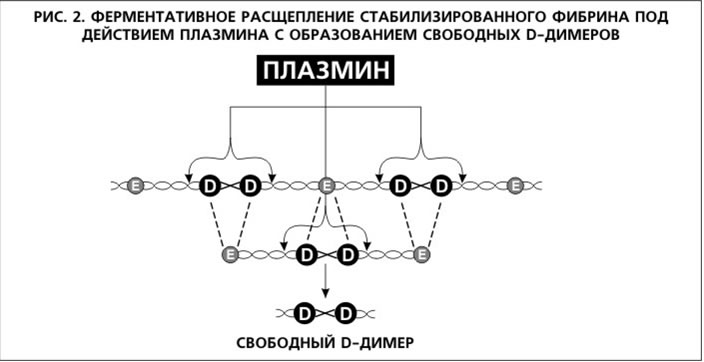
D-dimer is a breakdown product of cross-linked fibrin. Its concentration reflects fibrin formation and breakdown, rather than overall clotting potential or the presence of hereditary thrombophilia. Other markers of hemostatic activation include prothrombin fragment 1+2, thrombin–antithrombin complex, fibrin monomer and β-thromboglobulin. Their indications and sample requirements differ; no marker is free of limitations.
Thrombin cleaves fibrinopeptides A and B from fibrinogen to produce fibrin monomers. These polymerize, and activated factor XIII, in the presence of calcium, forms covalent cross-links that stabilize the fibrin network.
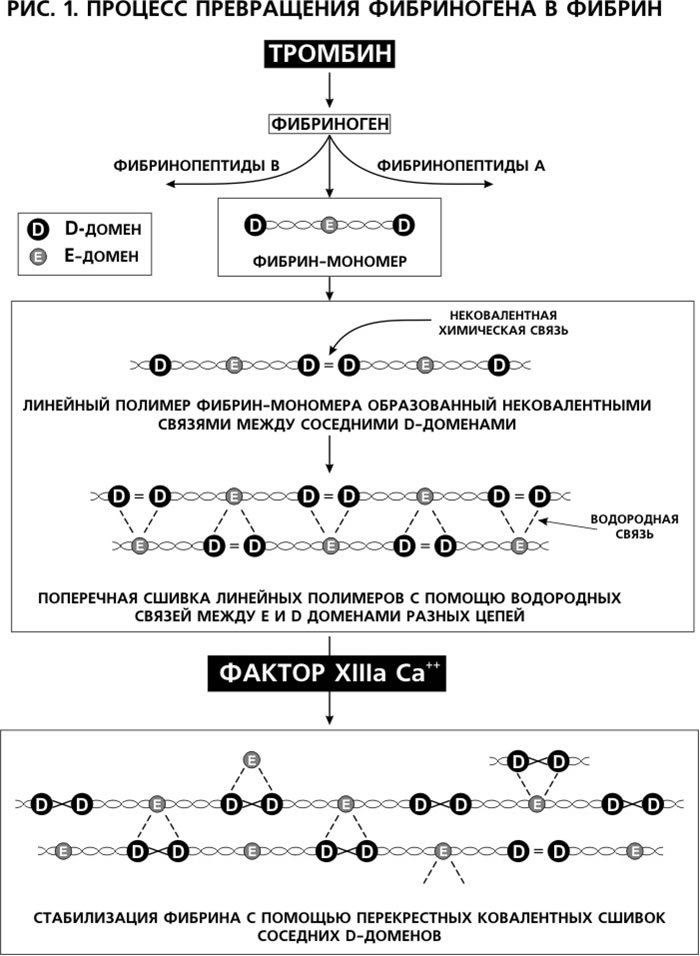
Plasmin degradation of stabilized fibrin produces D-dimer-containing fragments. D-dimer may therefore rise with thrombosis, but also with inflammation, infection, cancer, after surgery or injury, with advancing age and during pregnancy.
Units and Cutoffs
Results may be reported in FEU (fibrinogen-equivalent units) or DDU (D-dimer units). These scales are not interchangeable. Some assays use a cutoff of 500 ng FEU/mL (0.5 mg FEU/L), but the cutoff for the particular assay must be used. Validated algorithms may apply an age-adjusted cutoff in patients over 50. For example, for an assay with a baseline cutoff of 500 ng FEU/mL, age × 10 ng FEU/mL may be used; this formula must not automatically be applied to other methods.
DVT and PE
The clinician first determines clinical probability using a validated algorithm. When probability is not high, a negative high-sensitivity test can help exclude venous thromboembolism. A positive result does not confirm it: imaging is usually needed. When clinical probability is high, a negative D-dimer must not delay the required investigation. Anticoagulation decisions follow a clinical algorithm rather than the test value alone.
DIC
DIC is an acquired syndrome of pathological coagulation activation in which microthrombosis and consumption of platelets and clotting factors may coexist with bleeding and organ failure. It may be acute or chronic. Elevated fibrin breakdown markers, including D-dimer, are assessed alongside platelet count, prothrombin time, fibrinogen, clinical findings and the underlying disease. D-dimer alone does not diagnose DIC.
During Treatment
Anticoagulants can reduce D-dimer and affect the test's diagnostic sensitivity. Trends may be useful in selected clinical situations, but D-dimer is not a universal test for choosing doses or monitoring the effectiveness of every anticoagulant. Treatment should not be changed or stopped on this result alone.
Pregnancy
D-dimer often rises during normal pregnancy, particularly later in gestation. This does not by itself indicate thrombosis or an obstetric complication. A failure to rise or a fall also does not prove a complication. If PE is suspected, a clinician may use an algorithm specifically validated for pregnancy; nonpregnant cutoffs should not be applied mechanically. Serial D-dimer measurement in all pregnant patients to predict preeclampsia or placental abruption is not standard screening.
Sudden breathlessness, chest pain or a painful swelling of one leg requires urgent medical assessment; waiting for a test must not delay it.
Sources and professional guidelines
Updated: 03.11.2026