


A male factor can contribute to difficulty conceiving. In some men, impaired sperm production is associated with genetic changes. Their contribution depends on the clinical form, so no single percentage is given for all male infertility.
Spermatogenesis is the multistage formation of mature spermatozoa. Many genes on the Y chromosome and other chromosomes regulate it. Genetic changes can affect sperm number, structure, motility, and fertilizing ability. However, not every abnormality in these parameters has a genetic cause.
Azoospermia means absence of spermatozoa in the ejaculate, while oligozoospermia means a reduced sperm count. Impaired motility is a separate characteristic. Microdeletions of the Y-chromosome AZF region are one cause of impaired spermatogenesis, but not the only cause.
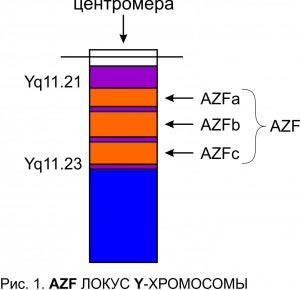
The Y chromosome contains genes involved in testicular development and spermatogenesis. AZF analysis assesses specific regions of this chromosome and does not replace investigation of other possible genetic and nongenetic causes of infertility.
The AZF region includes AZFa, AZFb, and AZFc (Fig. 1). Consequences depend on the exact deletion size and type. Complete AZFa or AZFb deletions usually have severe consequences for sperm production; AZFc deletions can involve either azoospermia or severe oligozoospermia. Prognosis cannot be determined solely by the number of affected subregions.
A specialist determines indications for Y-microdeletion testing from semen analysis, hormonal findings, and evidence of impaired sperm production. Testing is particularly relevant in nonobstructive azoospermia and very low sperm concentrations. Karyotyping and other genetic tests may also be needed. An AZF deletion requires counseling on reproductive options and the risk of transmitting the deletion to sons.

Sources and professional guidelines
Updated: 03.11.2026