


Hyperhomocysteinemia is an elevation of blood homocysteine above the laboratory reference interval. Homocysteine is normally present in blood; the term homocysteinemia without the prefix hyper- does not necessarily denote disease.
Homocysteine is a sulfur-containing amino acid that is not incorporated into proteins during protein synthesis. It is produced through the metabolism of methionine obtained from food. Within the methionine cycle, homocysteine can be converted back to methionine or used to form cysteine through the transsulfuration pathway.
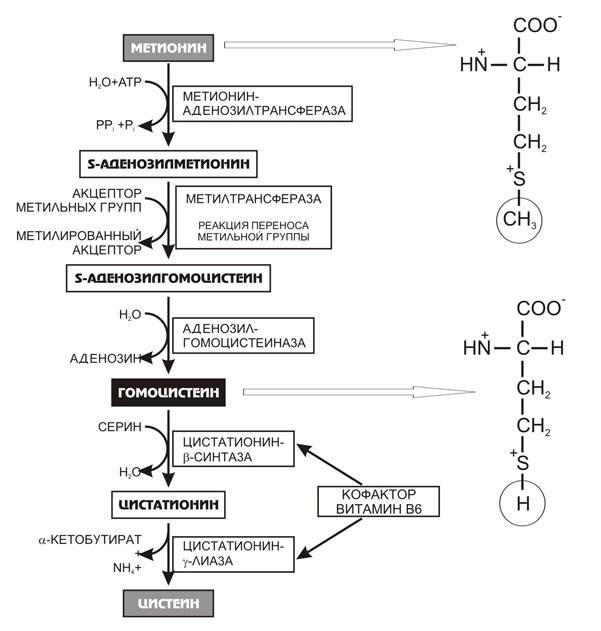
Figure 1. Formation of cysteine from methionine and serine; homocysteine is an intermediate metabolite.
Total homocysteine is usually reported in µmol/L, rather than ng/mL. Reference values depend on the method, age, sex, pregnancy and other factors; results should be compared with the interval on the laboratory report. An elevated result does not establish its cause and does not independently diagnose thrombosis, cardiovascular disease or a pregnancy complication.
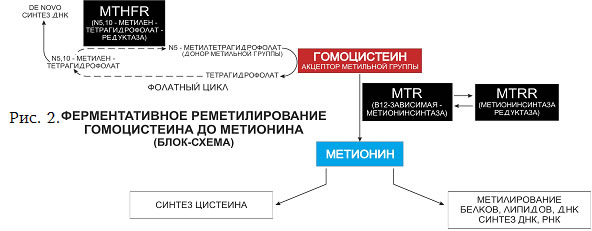
Remethylation of Homocysteine to Methionine
The process involves:
- Vitamin B12-dependent methionine synthase (MTR), which transfers a methyl group to homocysteine to form methionine.
- Methylenetetrahydrofolate reductase (MTHFR), which converts 5,10-methylenetetrahydrofolate into 5-methyltetrahydrofolate, the methyl-group source for the MTR reaction.
- Methionine synthase reductase (MTRR), which helps maintain methionine synthase activity through reductive reactivation.
Methyl-Group Transfer
The methyl group of 5-methyltetrahydrofolate is transferred first to cobalamin bound to methionine synthase, then to homocysteine. After oxidative inactivation, MTRR helps restore the enzyme's active form. This does not involve replacing a cyano group during every catalytic cycle.
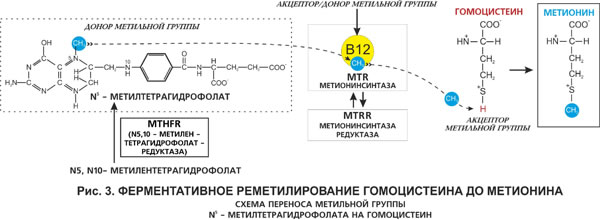
Coordinated enzyme activity and an adequate vitamin supply support homocysteine metabolism. Its concentration also depends on transsulfuration, kidney function, diet and medicines; it is not determined by one gene alone.
Genetic Factors
The common MTHFR variants C677T (Ala222Val) and A1298C (Glu429Ala) can affect enzyme properties. The effect of C677T on homocysteine depends in part on folate status. Common polymorphisms should not be confused with rare pathogenic variants causing severe inherited metabolic disorders.
MTR A2756G (Asp919Gly) and MTRR A66G (Ile22Met) have been studied in folate and homocysteine metabolism. Their presence alone, however, does not demonstrate enzyme deficiency or reliably predict thrombosis, pregnancy loss, Down syndrome or cancer. Universal percentages for enzyme reduction and risk cannot be assigned to individual genotypes without considering the population and study conditions.
Routine testing of common MTHFR variants is not recommended to diagnose inherited thrombophilia or investigate recurrent pregnancy loss or other adverse perinatal outcomes. Suspected rare inherited disorders require a separate specialist assessment.
Other Causes of Elevation
- Vitamin B12, folate and sometimes vitamin B6 deficiency.
- Inadequate nutrition or malabsorption, including intestinal disease and the effects of certain operations.
- Chronic kidney disease, including in patients receiving hemodialysis.
- Certain medicines affecting vitamin metabolism or absorption, such as some anticonvulsants and folate antagonists.
- Smoking; age and accompanying illnesses also matter.
Vitamin B12 is needed by methionine synthase, folates support one-carbon transfer, and vitamin B6 supports cystathionine β-synthase and cystathionine γ-lyase in converting homocysteine to cysteine. Deficiency may increase homocysteine but does not make every associated complication inevitable. Treatment follows identification of the cause; medicines should not be stopped without medical advice.
Cardiovascular Risk and Pregnancy
Elevated homocysteine occurs in several disorders and is associated with cardiovascular risk. Association does not establish direct causation: lowering the value with vitamins does not guarantee prevention of heart attack or stroke. Routine population screening with this marker is not recommended.
Homocysteine concentrations usually fall during pregnancy. Associations between elevated values and certain adverse outcomes are being studied, but a single test does not establish the cause of infertility, pregnancy loss, preeclampsia, placental insufficiency or congenital abnormalities. It does not replace obstetric assessment or prenatal screening.
Neural tube defects, including anencephaly and spina bifida, have multifactorial origins. Folic acid reduces their risk. CDC recommends that everyone who could become pregnant obtain 400 mcg of folic acid daily, including those with common MTHFR variants. A clinician may recommend a different dose in particular circumstances.
When Testing May Be Useful
- Suspected B12 or folate deficiency, interpreted alongside other laboratory and clinical findings.
- Suspected homocystinuria or another rare inherited metabolic disorder, and monitoring of an established disorder.
- Selected clinical situations, when ordered by a clinician and likely to inform further investigation.
Pregnancy planning, a common folate-cycle polymorphism, a family history of thrombosis or a positive antiphospholipid antibody result does not by itself make testing mandatory. Preparation and the effects of medicines should be discussed with the laboratory and treating clinician.
Sources and professional guidelines
- MedlinePlus — Homocysteine test
- CDC — Mthfr
- CDC — Clinical overview
- ods.od.nih.gov — Folate HealthProfessional
- gimjournal.org — S1098 3600(25)00113 3
Updated: 03.11.2026