

Last updated
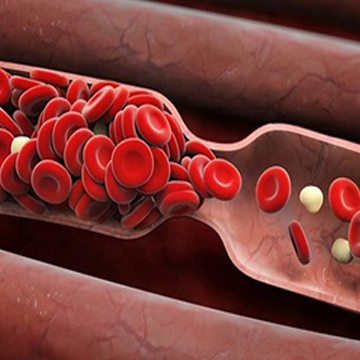
Thrombophilia is an inherited or acquired predisposition to thrombosis. Typical venous thromboembolism manifestations are deep vein thrombosis and pulmonary embolism. In the latter, an embolus enters the pulmonary rather than coronary arteries. Venous thrombophilia should not automatically be considered the cause of myocardial infarction or arterial stroke.
Inherited forms include factor V Leiden, prothrombin G20210A, and antithrombin, protein C, and protein S deficiencies. Antiphospholipid syndrome is an example of an acquired condition. Somatic JAK2 V617F in a myeloproliferative disorder is a separate clinical situation, not an ordinary inherited polymorphism.
An inherited risk factor does not mean thrombosis will inevitably occur. Risk depends on personal and family history, age, pregnancy and the postpartum period, estrogen-containing drugs, surgery, immobilization, and other circumstances.
Pregnancy and gynecology. Pregnancy, particularly the postpartum period, increases venous thrombosis risk. Testing, contraception, and prevention decisions are individualized. A genetic result alone does not establish the cause of pregnancy loss or automatically indicate anticoagulation.
Laboratory diagnosis. PCR and other molecular methods detect specific DNA variants, including F5 Leiden and F2 G20210A. Natural anticoagulant deficiencies and antiphospholipid syndrome require appropriate functional, quantitative, or immunological assays. Their results may depend on medication, acute thrombosis, and other conditions.
The historical Diagen Plus laboratory list included the following variants. It is retained to explain test names and does not imply that every item is recommended for diagnosing thrombophilia:
- FGB: G(-455)A
- F2: G20210A
- F5: G1691A
- F7: G10976A
- F12: C46T
- F13A1: G103T
- SERPINE1/PAI-1: -675 5G/4G
- ITGA2: C807T
- ITGB3: T1565C
- JAK2: Val617Phe (V617F)
- MTHFR: C677T
F2 G20210A is associated with increased prothrombin production and venous thromboembolism risk. F5 G1691A (Leiden) reduces activated factor V sensitivity to protein C inactivation. Both results require clinical interpretation.
MTHFR C677T, SERPINE1/PAI-1 4G/5G, and ITGA2 C807T should not be offered as mandatory initial thrombophilia screening. Clinical utility for this approach is not established for common MTHFR and PAI-1 variants. A variant does not require anticoagulation or a special folate regimen.
JAK2 testing has separate indications, such as suspected myeloproliferative disease or selected unexplained thromboses at unusual sites. It is not a lifelong unchanging test of inherited predisposition.
Testing is selected when the result can influence management. General-population screening before combined oral contraceptives is not recommended. Finding a risk factor does not replace diagnosis of current thrombosis or independently determine treatment duration.
Properties of genetic testing. An inherited DNA variant usually remains unchanged throughout life and often does not require repeat testing. Analytical reliability nevertheless depends on the method and specimen quality; the assay detects only its specified targets. A negative panel does not exclude every cause of thrombosis. Different considerations apply to somatic variants, including JAK2.
The original material listed PCR with electrophoretic detection, PCR with restriction analysis (RFLP), BioChip hybridization, and Bio-Rad real-time PCR. Current methods, panel composition, and indications should be confirmed with the laboratory and treating clinician.
Sources and professional guidelines
- ASH: Thrombophilia Testing
- ASH 2023 Guidelines for Thrombophilia Testing
- BSH: Thrombophilia Testing Guideline
- ACMG: MTHFR Testing Lacks Evidence
Updated: 03.11.2026