

Last updated
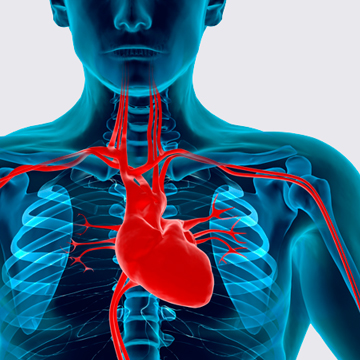
Cardiovascular diseases (CVDs) include disorders of the heart and blood vessels: coronary heart disease, cerebrovascular disease, peripheral arterial disease, arterial hypertension and other conditions. Venous thrombosis and thromboembolism form a separate group of vascular disorders with different mechanisms and risk factors.
CVDs are an important cause of death and disability. They are usually multifactorial: heredity interacts with age, smoking, blood pressure, lipid metabolism, diabetes, physical activity and diet. Family history helps assess risk, but does not mean a small set of common polymorphisms can establish the cause or reliably predict disease.
Arterial Hypertension
Blood pressure regulation involves the kidneys, nervous and endocrine systems, including the renin–angiotensin–aldosterone and kallikrein–kinin systems. Most hypertension reflects multiple genetic and environmental factors. Routine genetic testing of all patients with elevated blood pressure or their relatives is not recommended. When a rare monogenic form is suspected, a specialist selects targeted testing.
Thrombophilia
Established inherited venous thromboembolism factors include factor V Leiden (F5), prothrombin G20210A (F2), and antithrombin and protein C/S deficiencies. Testing indications depend on the clinical situation and whether results will change management. Common MTHFR, SERPINE1/PAI-1, ITGA2 and ITGB3 variants are not equivalent to these conditions and should not automatically justify anticoagulation. Somatic JAK2 V617F testing has separate hematological indications and does not test inherited predisposition.
Atherosclerosis and Coronary Heart Disease
Atherosclerosis is a chronic process involving lipid accumulation and inflammatory changes in arterial walls. Plaques may narrow a vessel; their rupture or erosion can trigger local thrombosis. This is more accurate than presenting simple plaque detachment as the universal mechanism. Inadequate myocardial blood supply may cause angina and myocardial infarction. LDL cholesterol, blood pressure, smoking, diabetes and family history matter. Particular inherited disorders, such as familial hypercholesterolemia, require specific assessment.
Ischemic Stroke
Ischemic stroke occurs when blood supply to an area of the brain is interrupted. Causes include large- or small-artery disease and embolism from the heart, particularly with atrial fibrillation. A folate and coagulation SNP panel cannot replace assessment of causes or prevention. Inherited thrombophilia is primarily associated with venous events; testing is not a universal investigation after arterial stroke.
Assessing Hereditary Risk
The clinician considers age at onset, family history, blood pressure, lipid profile, glucose and other clinical findings. Features of a particular inherited syndrome may warrant genetic counseling and targeted testing. Common candidate variants and statistical associations are not equivalent to a diagnosis, individual prognosis or proven treatment selection.
The variant and laboratory-technology list below is retained from the Diagen Plus description. It describes potential analytical targets, rather than a CVD-prevention panel recommended for every patient. Some names are historical; the exact variant and assay coverage should be checked with the laboratory. A negative result does not exclude CVD or remove the need to manage conventional risk factors.
Variants in Coagulation and Related Protein Genes
- FGB (fibrinogen β-chain): G(-455)A
- F2 (prothrombin): G20210A
- F5 (factor V): G1691A
- F7 (factor VII): G10976A
- F12 (factor XII): C46T
- F13A1 (factor XIII A1 subunit): G103T
- SERPINE1/PAI-1 (plasminogen activator inhibitor-1): -675 5G/4G
- ITGA2 (integrin α2): C807T
- ITGB3 (integrin β3): T1565C
Folate-Metabolism Gene Variants
- MTHFR (methylenetetrahydrofolate reductase): C677T
- MTHFR (methylenetetrahydrofolate reductase): A1298C
- MTR (methionine synthase): A2756G
- MTRR (methionine synthase reductase): A66G
- SLC19A1 (folate transporter): A80G
Renin–Angiotensin, Kinin and Endothelial-System Variants
- REN (renin): I9-83G/A
- AGT (angiotensinogen): T704C, Met235Thr
- AGT (angiotensinogen): C521T, Thr174Met
- ACE (angiotensin-converting enzyme): Alu Ins/Del
- AGTR-1 (angiotensin II type 1 receptor): A1166C
- AGTR-2 (angiotensin II type 2 receptor): G1675A
- BDKRB2 (bradykinin B2 receptor): Ins/Del
- NOS3 (endothelial NO synthase): G894T, Glu298Asp
- NOS3 (endothelial NO synthase): T-786C
Separate somatic marker: JAK2 Val617Phe (V617F), investigated when a clonal hematopoietic disorder is suspected.
Laboratory Technologies
- PCR with electrophoretic detection
- PCR with amplicon restriction: RFLP
- PCR followed by hybridization: BioChip
- Real-time PCR: Bio-Rad
Sources and professional guidelines
- academic.oup.com — 7741010
- nhlbi.nih.gov — Risk factors
- PubMed Central — PMC9542828
- PubMed Central — PMC10709681
- PubMed — PMID 15575509
Updated: 03.11.2026