

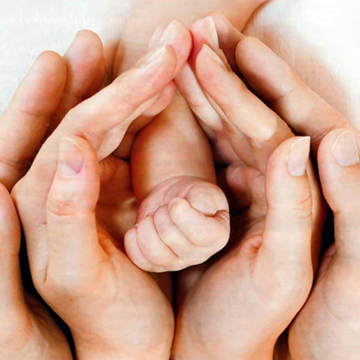
In vitro fertilization (IVF) is an assisted reproductive technology in which fertilization occurs outside the body. It is one treatment for infertility, including female, male and combined factors; its appropriateness depends on individual assessment.
The ovaries are usually stimulated with gonadotropins, followed by egg retrieval and laboratory fertilization with prepared sperm. Intracytoplasmic sperm injection (ICSI) is used for specific indications. Embryos are cultured for several days, after which a suitable embryo is transferred to the uterus or frozen for later transfer. Not every retrieved egg fertilizes, and not every embryo results in a live birth.
The first IVF birth occurred in the United Kingdom in 1978. There is no universal “35%” success rate: outcomes depend particularly on egg age, infertility causes, embryo characteristics and treatment. Pregnancy must be distinguished from live birth, and success per transfer from success per retrieval or complete cycle.
IVF is not risk-free. Risks include ovarian hyperstimulation syndrome (OHSS), egg-retrieval and anesthetic complications, and ectopic or multiple pregnancy; treatment can also be emotionally and financially demanding. Modern protocols and single-embryo transfer reduce some risks. Repeat attempts are discussed individually, without a guaranteed successful number of cycles.
What ovarian reserve means
Ovarian reserve describes the quantity of eggs remaining. The main pool develops before birth and subsequently declines through follicular atresia and ovulation. Only a small fraction of follicles ever ovulate. The rate of decline differs between women; exact remaining egg numbers cannot be assigned by age.
In a typical cycle, FSH supports a group of developing follicles, usually with one becoming dominant. The growing follicle produces estradiol. Sustained estradiol elevation promotes the LH surge that triggers ovulation. Other follicles in the group usually undergo atresia. Timing varies; ovulation does not always occur after exactly two weeks.
Age-related reserve decline differs from premature ovarian insufficiency. Reduced reserve may be associated with genetic factors, surgery, chemotherapy, radiotherapy and some diseases. Low reserve is not synonymous with infertility, and normal reserve does not guarantee pregnancy.
Why reserve is assessed before IVF
Testing mainly helps predict egg yield and a low or excessive response to stimulation. It does not directly measure egg quality, determine the exact timing of menopause or reliably predict natural conception by itself. Age remains an important determinant of egg quality and live-birth probability.
The most useful measures are anti-Müllerian hormone (AMH) and antral follicle count (AFC) on transvaginal ultrasound. They are interpreted with age, history, previous treatment response and the measurement method. Low AMH alone should not be grounds to refuse IVF.
| Measure | Main role | Limitations |
|---|---|---|
| AMH | Predicting egg yield and stimulation response. | Not a direct quality test or pregnancy guarantee; cutoffs are method-dependent. |
| AFC | Counting visible small follicles on ultrasound to predict response. | Depends on technique and operator; not an exact total egg count. |
| Basal FSH and estradiol | Additional information in selected clinical situations. | Cycle-dependent; less useful than AMH/AFC for predicting response. |
| Inhibin B | Participates in FSH regulation. | Not routinely recommended for reserve assessment because additional benefit is limited. |
Hormonal measures in detail
FSH: produced by the anterior pituitary. When needed, basal levels are assessed in the early follicular phase, usually days 2–4, with estradiol. Results vary between cycles; a normal result does not exclude diminished reserve. A fixed “8–10 IU/L” threshold cannot define high reserve in everyone.
Estradiol (E2): an early elevation can suppress FSH and complicate interpretation. Low E2 alone does not guarantee IVF success, including at any particular age. It is not a reliable independent predictor of response or fertilization.
Inhibin B: a dimeric transforming growth factor family protein produced by granulosa cells of growing follicles. It suppresses FSH through negative feedback. Routine reserve testing does not provide sufficient additional accuracy. It may be used for separate indications in certain ovarian tumors, particularly granulosa cell tumors, but is not a universal tumor marker.
AMH: a protein of the same family, produced mainly by granulosa cells of preantral and small antral follicles. It can usually be measured regardless of cycle day, but biological and analytical variability remain; hormonal contraception and clinical circumstances may influence results. There is no universal “normal 1–2.5 ng/mL” range across all ages and methods.
Choosing stimulation and discussing prognosis
OHSS prevention is especially important when a high response is expected. With low reserve, simply increasing the dose does not restore the egg pool or guarantee success; ESHRE does not recommend gonadotropin doses above 300 IU daily for predicted low responders. A fertility specialist selects the dose and protocol. A low response does not mean zero complication risk.
Small studies and tables assigning fixed pregnancy chances from AMH or follicle count alone cannot provide a personal prognosis. Choosing further treatment, IVF or other reproductive options requires a shared discussion of goals, likely benefits and limitations.
Sources and professional guidelines
- ASRM: Testing and interpreting measures of ovarian reserve
- ASRM: Fertility evaluation, 2026
- ESHRE: Ovarian stimulation for IVF/ICSI guideline, 2025
- HFEA: IVF facts and statistics
Updated: 03.11.2026