

Last updated
TORCH groups infections that can cause congenital disorders: toxoplasmosis (Toxoplasma gondii), rubella, cytomegalovirus (CMV), herpes simplex (HSV) and, in broader usage, other infections. These are different diseases with different transmission routes and diagnostic methods. No single test establishes a “TORCH status” or predicts fetal health.
Primary infection during pregnancy can be important, but risk depends on the organism and timing. CMV can also be transmitted after nonprimary infection, while the main neonatal HSV risk is acquisition during delivery, particularly when a first genital episode occurs shortly beforehand.
Who needs testing?
Tests are selected according to history, symptoms, exposure, ultrasound findings and local protocols. Rubella IgG is used to assess immunity. An identical routine IgM/IgG panel for all organisms in every pregnant woman, repeated each trimester, is not a universal recommendation. In particular, CDC and ACOG do not recommend routine CMV serological screening; CDC does not recommend routine HSV-2 screening in pregnancy without an indication or rubella IgM in asymptomatic, unexposed women. Toxoplasmosis and CMV screening programs differ between countries.
Rash, fever, concerning exposure, genital lesions or fetal abnormalities warrant timely obstetric consultation. An unexpected positive result requires confirmation and clinical interpretation, rather than self-treatment.
IgM, IgG and seroconversion
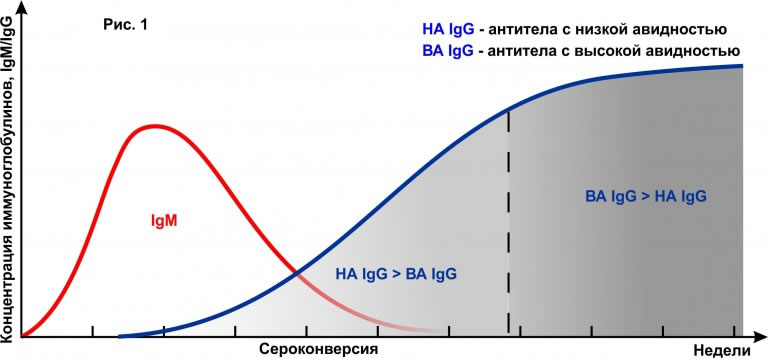
IgM often appears early in the immune response, while IgG generally persists longer. However, their timing overlaps: IgM may be absent in recent infection, persist for months, appear during reinfection or be falsely positive. IgG indicates exposure to a particular organism or, for some infections, vaccination; it does not independently date infection or always imply complete protection.
Seroconversion—the appearance of specific IgG in a previously seronegative person—is important evidence of primary infection when confirmed with comparable tests. Paired specimens, confirmation by another method and reference laboratory investigation may be necessary. There is no universal algorithm for every TORCH infection; the following IgM patterns must not be applied to HSV.
| Pattern | Possible meaning and further assessment |
|---|---|
| IgM− / IgG− | No antibodies detected. This may mean no previous exposure or testing too early; one specimen does not exclude recent infection. |
| IgM− / IgG+ | Usually past infection or, for rubella, vaccine-related immunity. Timing and absence of recent infection cannot always be established without context. |
| IgM+ / IgG− | Early infection or false-positive IgM is possible. Confirmation and, when indicated, a repeat specimen to assess seroconversion are needed. |
| IgM+ / IgG+ | Possibilities include recent infection, old infection with persistent IgM, nonprimary infection or false reactivity. Avidity and other tests are selected for the particular organism. |
What IgG avidity shows
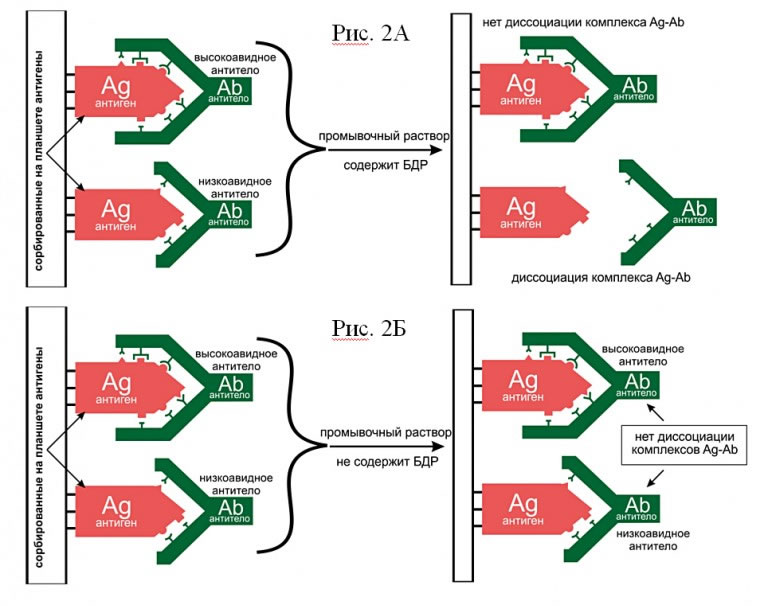
Avidity is the overall strength of antibody–antigen binding. It generally increases as the immune response matures. Some enzyme immunoassays compare binding before and after treatment with a reagent, such as urea, that preferentially disrupts weaker complexes. Calculations and low, intermediate and high avidity thresholds depend on the assay.
High avidity in early pregnancy can help exclude recent primary infection for certain organisms within the method’s validated time window. Low avidity may persist and does not independently establish the exact timing or fetal injury. High avidity later in pregnancy cannot exclude infection near its beginning. Interpretation combines IgM, earlier specimens, timing and clinical findings.
Rubella
Rubella is a viral infection transmitted mainly through the respiratory route; maternal disease may be mild or asymptomatic. Infection in early pregnancy is particularly dangerous and can cause pregnancy loss or congenital rubella syndrome with hearing and visual impairment, heart defects and other abnormalities.
IgG assesses immunity. IgM is used for suspected disease or significant exposure, rather than routine immunity assessment: false-positive reactions and recent vaccination can complicate interpretation. Avidity is most useful in early pregnancy as part of evaluating infection timing. Suspected cases require coordination of confirmatory testing with appropriate specialists.
Check protection before pregnancy. If immunity is absent, MMR is given before conception or after delivery; it is a live vaccine and is not given during pregnancy. Avoid pregnancy for 28 days after vaccination.
Toxoplasmosis
Toxoplasma gondii is an intracellular parasite. Infection can follow undercooked meat, contaminated produce, water or soil, and contact with cat feces. Cats participate in the parasite’s life cycle, but owning a cat does not by itself mean infection.
Primary infection during or shortly before pregnancy can be transmitted to the fetus. Transmission probability generally increases with gestational age, while severe consequences are more often associated with earlier infection. Eye and central nervous system injury, hydrocephalus and other abnormalities may occur; some children have no symptoms at birth but require follow-up. Reactivation can matter in severe immunodeficiency, so “primary infection only” is not an absolute rule.
Suspected recent infection requires confirmatory serology; IgM can persist. High avidity in an appropriate early specimen may help exclude recent acquisition, but low avidity does not establish it alone. Ultrasound and amniotic-fluid PCR are discussed when indicated. Confirmed infection requires specialist care, with treatment options also available in early pregnancy. A positive IgM or low avidity alone is not grounds for deciding to terminate a pregnancy.
Prevention includes thorough meat cooking, washing produce and hands, gloves when handling soil, and safe litter-box cleaning, preferably by someone else.
Cytomegalovirus
CMV is a herpesvirus that remains in the body for life. It spreads through bodily fluids, including saliva and urine, and is often asymptomatic. Congenital infection can cause hearing loss, impaired growth and development, and brain injury; consequences may also occur in children without obvious signs at birth.
Primary infection carries a higher transmission risk, but reinfection and reactivation can also cause congenital infection and harm the child. IgG does not eliminate this risk. Primary infection is assessed through IgG seroconversion or the combination of IgM, IgG and low avidity, accounting for method limitations. IgM alone is insufficient. Maternal serology does not establish fetal infection or prognosis; specialized diagnosis and monitoring are required when indicated.
Reducing contact with young children’s saliva and urine, washing hands after diaper changes and avoiding shared utensils can help reduce acquisition risk. Management after confirmed infection depends on gestational age and current specialist guidance.
Herpes simplex: HSV-1 and HSV-2
Both types can cause genital herpes; HSV-1 also commonly causes oral herpes. Infection persists lifelong, with possible recurrences and transmission without visible lesions. Symptoms may include painful blisters, ulcers, burning or itching, but appearances can be atypical.
When lesions are present, direct HSV detection by lesion NAAT/PCR with typing is preferred. Type-specific IgG is useful in selected situations but does not date infection; HSV-1 IgG cannot distinguish oral from genital infection. Low-positive results from some methods require confirmation. HSV IgM is not recommended because it cannot reliably distinguish primary infection from recurrence. HSV IgG avidity is not a standard universal method for dating infection.
Neonatal infection is acquired mainly through exposure during birth; intrauterine infection is rare. Risk is particularly high when genital herpes is acquired shortly before delivery and much lower with longstanding recurrent infection. Women should tell their obstetric team about their own or their partner’s herpes. Acquisition prevention, antiviral treatment and mode of delivery are discussed individually; active genital lesions or prodromal symptoms when labor begins require immediate assessment.
Sources and professional guidelines
- CDC: Rubella serology and avidity
- CDC: Pregnancy and rubella
- CDC DPDx: Toxoplasmosis laboratory diagnosis
- CDC: Clinical care of toxoplasmosis
- CDC: Preventing toxoplasmosis
- CDC: Laboratory testing for CMV
- CDC: Clinical overview of congenital CMV
- CDC: Genital herpes treatment guidelines
Updated: 03.11.2026